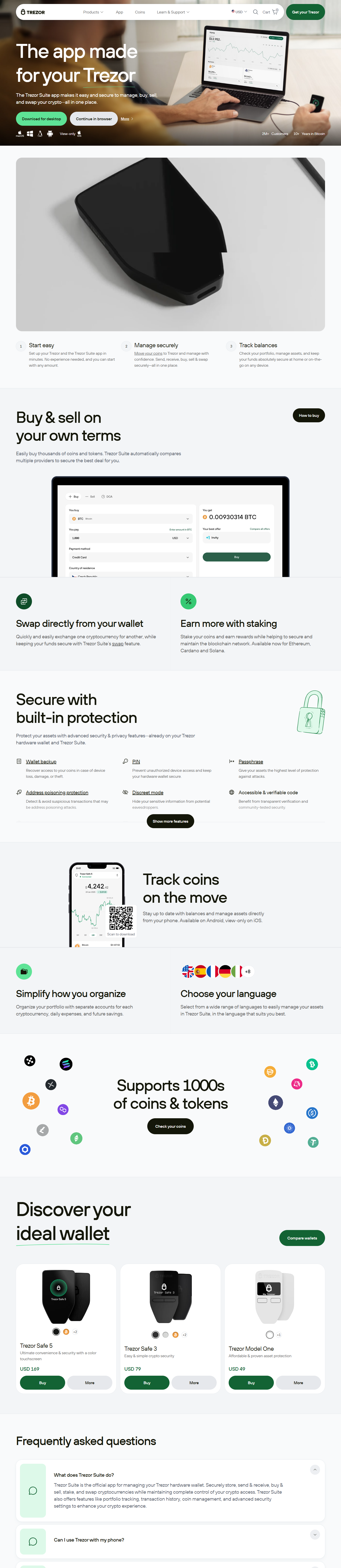
🟢 Trézor Suite — Official Trezor® Setup & Quick Guide
A secure beginning is the most critical step in cryptocurrency ownership. Trézor Suite — Official Trezor® Setup & Quick Guide is created to help users correctly initialize their hardware wallet, understand essential safety principles, and confidently manage digital assets using a trusted desktop or web interface. This guide focuses on correct procedures, user responsibility, and long-term asset protection.
What This Quick Guide Covers
This guide explains how a proper hardware wallet setup works and why following official steps matters. Many crypto losses occur not because of technical flaws, but due to unsafe setup habits. This guide helps users avoid those risks by emphasizing secure initialization, verification, and recovery planning.
The aim is to give users confidence from day one.
How Hardware Wallet Security Works
A hardware wallet keeps private keys completely offline inside a physical device. The desktop or web interface is only a management layer that displays balances and prepares transactions. No sensitive information is ever exposed to the internet or stored on a computer.
All important actions require direct confirmation on the device itself.
Desktop and Web Setup Options
Users can choose between two secure environments based on their needs.
Desktop Setup (Recommended)
The desktop option provides the highest level of control during initial setup. It runs locally on your system, reducing exposure to browser-based threats and ensuring a stable environment for generating recovery phrases.
Desktop tools are commonly available for Windows, macOS, and Linux.
Web-Based Setup
The web interface offers flexibility and faster access. When using this option, users must carefully verify the official website address before connecting their hardware wallet to prevent phishing attacks.
Step-by-Step Initialization Overview
A secure setup process usually includes:
Connecting the hardware wallet to your computer
Opening the trusted setup interface
Creating a new wallet directly on the device
Generating a recovery phrase offline
Verifying the phrase on the device screen
These steps ensure that the wallet is created safely and privately.
The Importance of the Recovery Phrase
The recovery phrase is the only backup for restoring funds if the hardware wallet is lost or damaged. It must be handled with extreme care:
Write it down on paper
Store it in a safe, offline location
Never take photos or save it digitally
Never share it with anyone
Loss or exposure of the phrase can result in permanent asset loss.
Using the Interface After Setup
Once initialization is complete, users gain access to a clean dashboard showing balances, transaction history, and account details. The layout is intentionally simple to reduce mistakes and guide users through actions clearly.
Every transaction includes a confirmation step on the hardware device.
Sending and Receiving Crypto Safely
Outgoing transactions always require physical approval on the hardware wallet. This protects funds even if the connected computer contains malware. Receiving cryptocurrency is straightforward and does not expose private keys or sensitive data.
This confirmation-based system is the core strength of hardware wallets.
Managing Multiple Digital Assets
The interface supports multiple cryptocurrencies, allowing users to manage different assets from one secure environment. This reduces complexity and eliminates the need for multiple wallet applications.
All supported assets benefit from the same offline security model.
Privacy and Full Self-Custody
No personal accounts or identity verification are required during setup. Users interact directly with blockchain networks while maintaining privacy and full ownership of their funds.
There are no centralized controls, freezes, or third-party permissions involved.
Optional Built-In Tools
Some interfaces include optional features for exchanging or acquiring cryptocurrency. These tools are designed to work within the secure environment, and all actions still require hardware confirmation.
Convenience is added without weakening security.
Common Setup Mistakes to Avoid
To remain secure, users should avoid:
Entering recovery phrases on websites
Installing software from unofficial sources
Skipping device verification steps
Using public or shared computers
Most security incidents can be prevented with careful setup habits.
Who This Guide Is For
This setup and quick guide is ideal for:
First-time hardware wallet users
Long-term crypto holders
Security-focused individuals
Anyone who values full self-custody
The instructions are written to be practical and easy to understand.
Best Practices After Setup
After completing setup:
Store recovery phrases securely offline
Prefer desktop access for larger balances
Regularly check for official updates
Never approve unknown device requests
Consistency plays a key role in long-term protection.
Final Summary
Trézor Suite — Official Trezor® Setup & Quick Guide offers a clear and responsible approach to hardware wallet initialization. By following proper setup steps and using trusted desktop or web tools, users can protect their digital assets from common risks while maintaining full control and privacy.